
OBESITY CENTER AND OPERATIONAL OPTIONS
WEIGHT REDUCTION – STOMACH REDUCE / Türkiye
Bariatric surgery is fundamentally based on two principles: reducing abdominal circumference and/or preventing malabsorption, i.e., inhibiting the absorption of nutrients during specific phases of digestion. These procedures save lives when performed at the right time.
We offer these treatments in Turkey starting from €6000.
Who is weight loss surgery suitable for?
Bariatric surgery is recommended for patients with a body mass index (BMI) of 35 or higher for whom weight loss through programs such as special medical diets, exercise, or medical therapy is not possible. It is also recommended for patients with a BMI over 30 who also suffer from high blood pressure, diabetes, and sleep apnea, which negatively impact their quality of life. The choice of procedure is made by specialists after various examinations and observations.
Women who plan to have children in the near future are advised to consult with their doctors before the procedure, as pregnancy is not recommended in the first 24 months after bariatric surgery.
The following procedures are generally used in bariatric (weight reduction) surgery. Compared to open surgery, they all offer the patient the advantage of a more comfortable recovery period, as laparoscopic or robot-assisted procedures require only very small incisions. Patients can return to their daily lives more quickly but must adhere to their new dietary plan, which is monitored by the metabolic and dietician specialists at the Acıbadem Obesity Center.
1) Gastric Banding
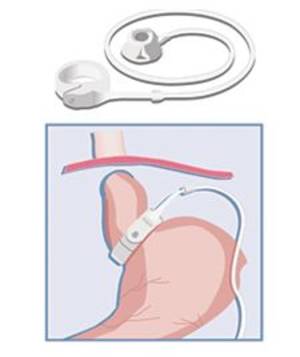
In this method, which uses a flexible silicone gastric band, also known as a gastric clamp, the stomach’s volume is reduced by placing the band around the stomach just below the point where the esophagus joins the stomach. The band’s shape can be compared to an elongated balloon or a bicycle inner tube. This balloon is connected by a thin tube to a port located under the skin. Starting about a month after the procedure, the band is gradually inflated by serum injections through the port, thus easily reducing the stomach’s volume. Although the patient consumes only small amounts of food, this method allows them to quickly experience a feeling of fullness.
How does the operation proceed?
The gastric band is implanted using laparoscopic techniques in many patients. Because the operation is performed through tiny incisions, the patient can return to their daily routine very quickly.
After the treatment
With this method, patients lose approximately 60-80% of their excess weight within 18 to 24 months after the procedure. As long as the band does not cause any problems, there is no risk of weight regain.
2) Sleeve Gastric Surgery
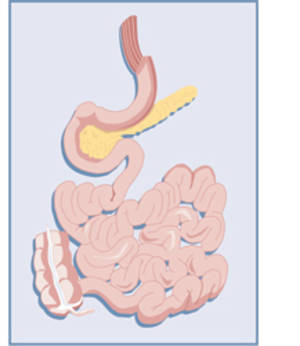
The goal of sleeve gastrectomy is to reduce stomach volume to approximately 60-100 ml in order to induce a feeling of fullness even after consuming small amounts of food. In this procedure, a specific portion of the stomach is surgically removed, leaving behind a tube-shaped stomach about the size of a banana. The patient no longer experiences hunger afterward because the part of the stomach that produces the hormone responsible for triggering hunger is removed. This surgery only limits the amount of food that can be consumed. The patient does not need to take any additional vitamin or mineral supplements, as food intake remains completely normal.
How does the operation proceed?
Sleeve gastrectomy operations are also performed using laparoscopic techniques. The operation is carried out through small incisions in the abdominal cavity.
After the treatment
After the operation, the patient consumes smaller amounts of food and feels full more quickly. This rapid feeling of satiety leads to a loss of appetite. The amount of food consumed is significantly reduced, so that patients lose 80-90% of their excess weight within a few years after the procedure.
You can watch the introductory video for this treatment here.
3) Gastric Bypass
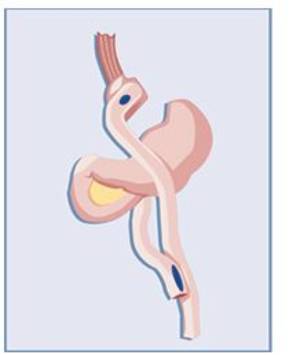
In gastric bypass surgery, a small portion of the stomach (approximately 30-50 ml) is connected to the ileum (a part of the small intestine), and the larger portion is bypassed. This reduces the stomach volume, similar to other bariatric surgeries, and also causes some of the food to be excreted before all nutrients are absorbed, as a portion of the intestine is bypassed. The patient consumes less food, feels full more quickly, and only digests a certain amount of the food.
How does the operation proceed?
As with other bariatric surgeries, gastric bypass surgery is performed laparoscopically. Access to the abdominal cavity is gained through small incisions, which also protects the patient from potential risks such as wound infections or hernias after the operation. The use of robots in gastric bypass surgery further increases safety during the procedure, as three-dimensional imaging allows for the smooth execution of complex techniques.
After the procedure
Following the surgery, patients feel full after consuming small amounts of food, which reduces their appetite and significantly decreases their overall food intake. Due to the reduced stomach size and impaired nutrient absorption, vitamin and mineral supplements are necessary and must be taken according to the instructions of the surgeons and dieticians. This allows the patient to lose weight without depriving them of essential vitamins and minerals. The patient can typically leave the hospital 3 or 4 days after the procedure.
You can watch the video for this treatment here.
4) Robot-Assisted Treatments
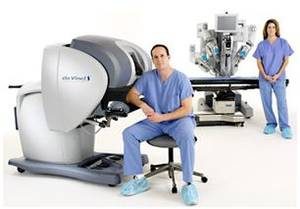
On the recommendation of your doctor, you could also opt for weight-loss surgery. This involves the use of da Vinci robots. These procedures also aim to induce a faster feeling of satiety with reduced food intake and are among the most efficient and modern methods in obesity therapy. Open surgery in obese patients has been associated with considerable difficulties and risks due to their overall health and often problematic wound healing. Robot-assisted surgery not only offers visual and technical advantages but also makes the operation significantly easier and is generally more beneficial.
Gastric bypass surgery, the first robot-assisted bariatric surgery, is considered the gold standard in bariatric surgery. The stomach volume is reduced, and some of the food is excreted before all nutrients are absorbed, as a portion of the intestine is bypassed. Robot-assisted surgery offers significant advantages for obese patients. These include:
– Less blood loss and reduced need for blood transfusions
– Lower risk of infection
– Less pain and scarring
– Shorter hospital stays
– Faster recovery time after the procedure
Contact us today for any questions. We are happy to assist you.